How light changes a room
The same room can look cosy, clinical or cramped. Colour temperature, brightness and where the light comes from decide. Switch the colour on the photo and see the difference.
↑ Guide index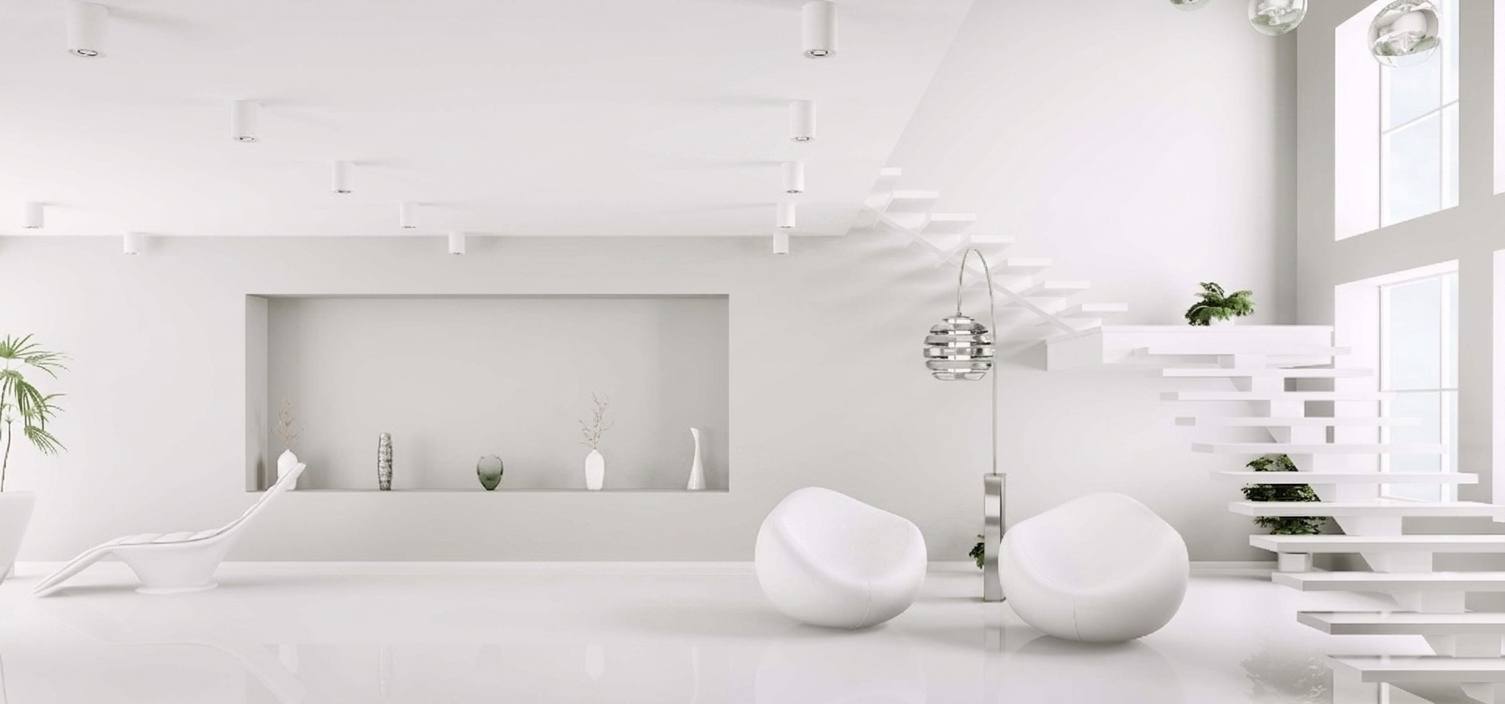
2700 K, warm white. White walls turn creamy, the room feels smaller and cosier. Good for living rooms, bedrooms and dining rooms.
4000 K, neutral white. Colours closest to daylight, a clean and bright room. Good for kitchens, bathrooms and a home office.
6500 K, cool white. The room feels larger and colder, but at home in the evening it looks like an office. Better suited to a garage or workshop.
Dimmed warm light looks natural, like candlelight. Dimmed cool light turns grey and gloomy. For dimming choose 2700 K or dim-to-warm sources.
Simulation on a photo: the same room with changed colour and brightness of light.
Five rules that change how a room looks
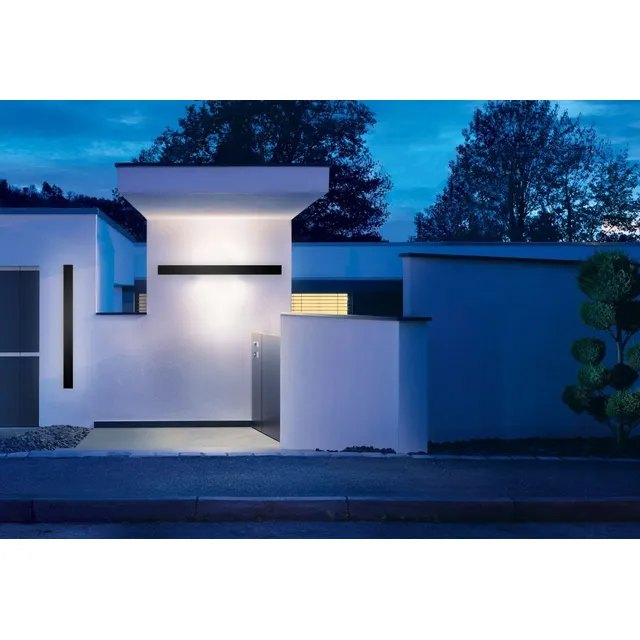
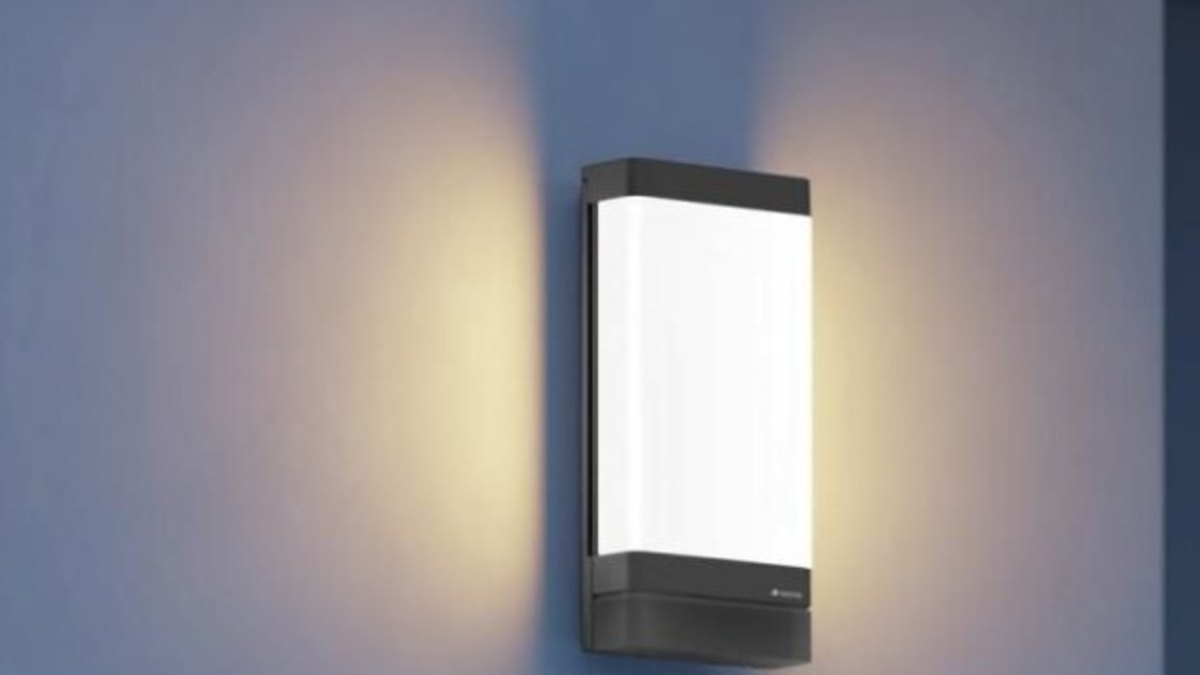
- Light on the walls makes a room bigger. Wall lights, LED strip in a suspended ceiling or spots aimed at a wall push it back visually. A room lit only from above feels lower.
- Several points instead of one. A single lamp in the middle of the ceiling gives flat light and dark corners. Add a second layer: a wall light, a floor lamp, shelf lighting.
- A low pendant creates a zone. A lamp over a dining or coffee table defines a space in an open-plan room without partition walls.
- Light walls reflect, dark walls absorb. A white wall reflects about 80% of light, dark grey or navy 10-20%. A room in dark colours may need twice the lumens.
- One colour temperature per room. 2700 K and 4000 K bulbs side by side look like a mistake. When buying several sources, check they share the same colour temperature.

How to check before you buy
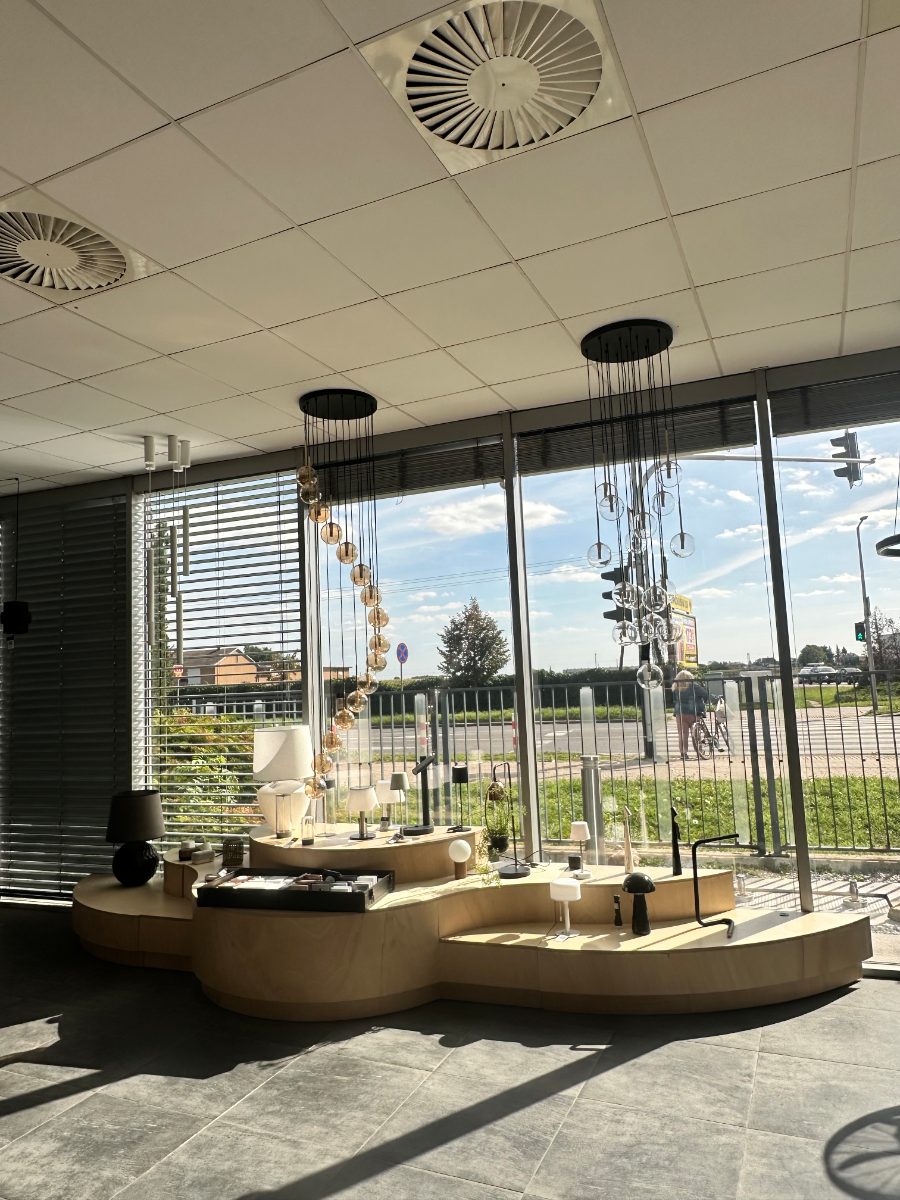
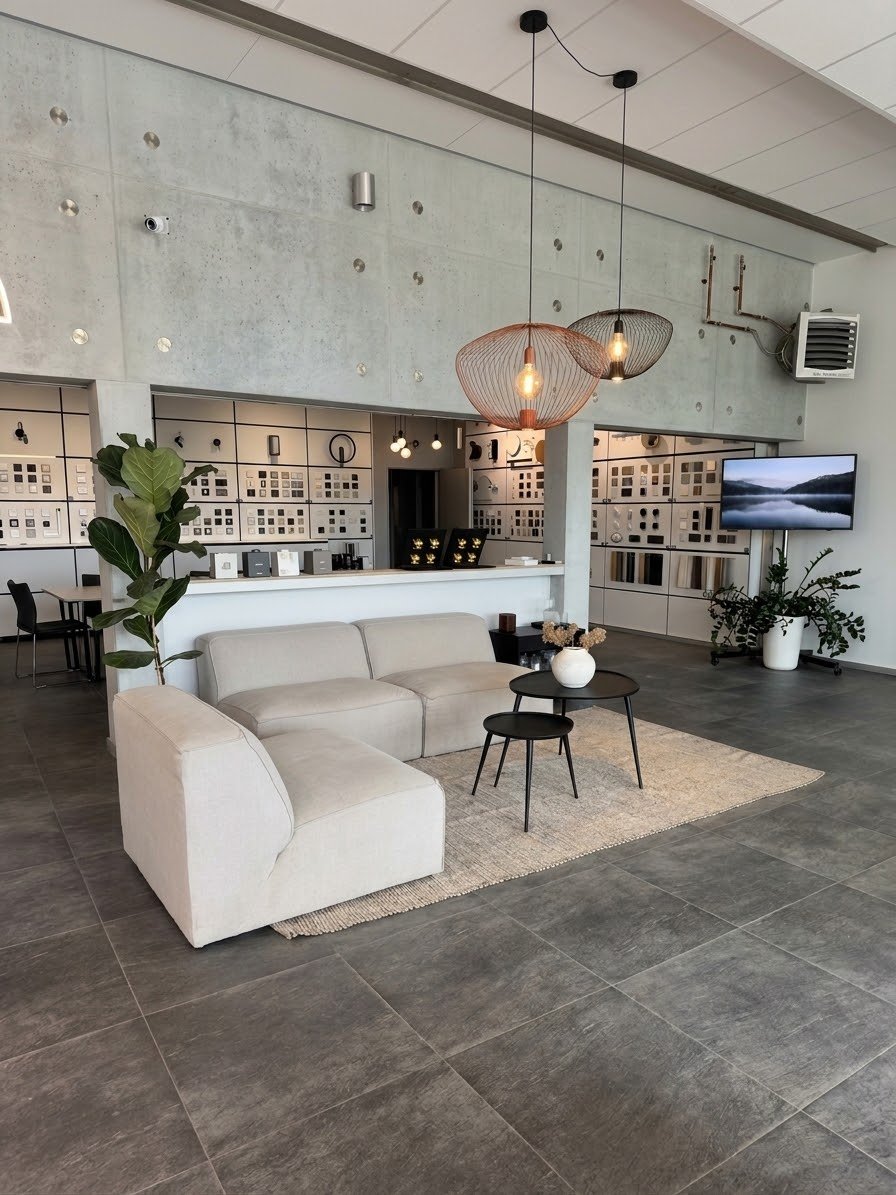
On a bulb package look for three numbers: lumens (brightness), kelvins (colour) and CRI (colour rendering, at least 80 at home, 90 at a mirror or wardrobe). You can also see colours and fittings live in our showroom in Ożarów Mazowiecki: how to get there.